Our Care Team’s Take on the Updated Dietary Guidelines for Americans
Here's what our Care Team has to say about the updated Dietary Guidelines for Americans.
Primary care, functional medicine, and wellness. All under one roof. We're built for your best not your baseline.
Learn MoreA Step Forward: Plants and Protein Take Center Stage
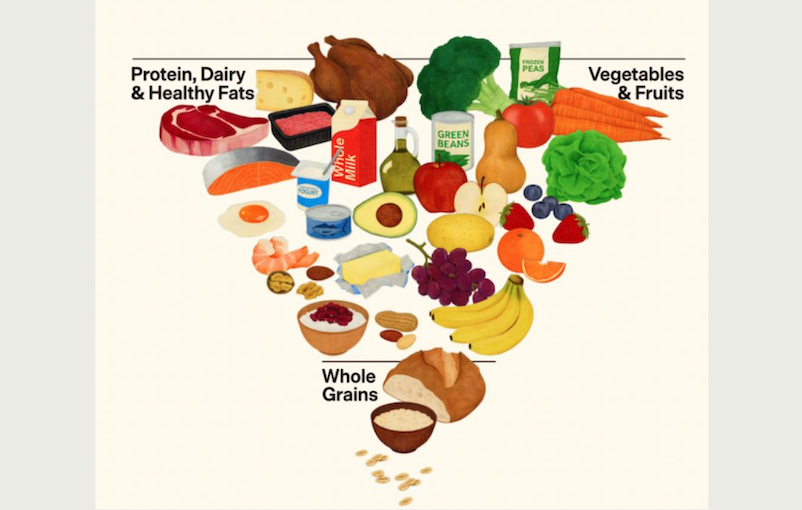
At first glance, there is a lot to like about the updated Dietary Guidelines for Americans. Seeing vegetables, fruits, and protein prioritized at the top is a win in our book. Most people would benefit tremendously from eating more colorful, fiber-rich plants and pairing them with a more realistic intake of high-quality protein. The majority of our plate should come from these two groups, and honestly, most of us can do better here.
Why Fiber Matters More Than Ever
Fiber plays a critical role in gut health, metabolic function, and inflammatory balance. The updated guidance’s emphasis on fiber and gut health is one of its strongest additions, pairing its importance with clear direction on the foods that support or challenge digestion. It encourages regular intake of prebiotic-rich and fermented foods to promote a diverse, healthy gut microbiome, while offering practical guidance on foods to limit. Highly acidic foods, ultra-processed products, and added sugars can disrupt microbial balance, promote less favorable bacteria, and contribute to gut inflammation, making their reduction essential for long-term gut health.
Protein Guidance Is Finally Evolving
Protein is another area where the conversation is finally evolving. Historically, recommended intakes have been too low, while social media tends to swing the pendulum too far in the other direction. Seeing government guidance move above bare-minimum requirements is encouraging, even if there is still room for nuance.
The Dairy Dilemma
But then there is the elephant in the room: dairy. Do not get us wrong, high-quality dairy in small amounts can absolutely have a place. And we will take full-fat, minimally processed dairy over sugar-loaded low-fat options any day. That said, placing dairy at the very top of the pyramid feels aggressive. For us, dairy is something we would have placed below whole grains. It can be inflammatory, and excess saturated fat contributes to the cardiovascular issues we see so commonly. It is hard to justify its placement above foods like nuts, seeds, avocado, and olive oil, which are some of the most consistently cardioprotective, anti-inflammatory foods we have.
Beef Tallow and Red Meat: Nuance Is Missing
There’s been a push around beef tallow—and we’ll just say, we don’t get it. As for red meat, we’re not anti–red meat. High-quality red meat in moderation can be an excellent source of protein, iron, zinc, and B vitamins, but not all proteins are created equal. Fish and eggs belong at the top, with lean poultry slightly below and often prioritized over red meat. For most people, red meat does not need to be the cornerstone of their daily intake.
Carbohydrates Should Match Your Activity Level
When it comes to grains and carbohydrates, we appreciate that non-starchy vegetables are prioritized, with fruits and starchy vegetables placed above grains—a clear step in the right direction. More importantly, carbohydrate needs should be activity-dependent. We all require a baseline amount to support brain function, mood, and metabolic health, so keto is not the goal. Higher activity levels call for more carbohydrates, while lower activity levels require fewer. And, as always, the quality of the carbohydrate matters just as much as the quantity.
Strong Evidence-Based Messages Worth Highlighting
It’s also important to note that the updated pyramid was only part of the announcement. Many of the broader guidelines deliver strong, evidence-based messages: emphasizing real, whole foods; reducing ultra-processed foods; limiting added sugars; increasing protein intake; avoiding artificial dyes and additives; and prioritizing fiber and fermented foods to support gut health—all principles we champion at The Lanby.
Alcohol Guidance: Less Clarity Than Before
Another notable change involves alcohol guidance. Rather than specifying daily limits, the updated recommendations simply state that lower alcohol consumption is better for overall health. While this is directionally accurate, the shift away from prior quantitative guidance of up to one drink per day for women and up to two drinks per day for men removes important specificity for both clinicians and the public. Although the guidance acknowledges that health risks may occur even at lower levels of intake, the language is vague and offers little practical direction for risk stratification. Additionally, the recommendations fail to meaningfully connect alcohol consumption to well-established associations with disease states, including cardiometabolic disease and multiple cancers.
Two Steps Forward, One Step Back
When red meat, beef tallow, and cheese are presented as apex nutrition, it does make us question the influence, credibility, and decision-making behind all of the advice given. It muddies the waters. It feels like two steps forward and one step back—which is still progress, but not without concern.
Why Personalized Nutrition Still Matters Most
Ultimately, this is why we always advocate for working with a Care Team that looks at you as an individual. Your age, goals, activity level, health history, preferences, and life stage all matter. There is no one-size-fits-all pyramid. The best nutrition plan is the one that is personalized, realistic, and sustainable for you. Always talk with a trusted physician and dietitian to determine what actually makes sense for your body.

Book a complimentary Discovery Call to learn about our membership, discover how your dedicated care team will support you, get your questions answered, and see if The Lanby is the right fit for you.


.avif)